Business Center and Research Facility
Introduction
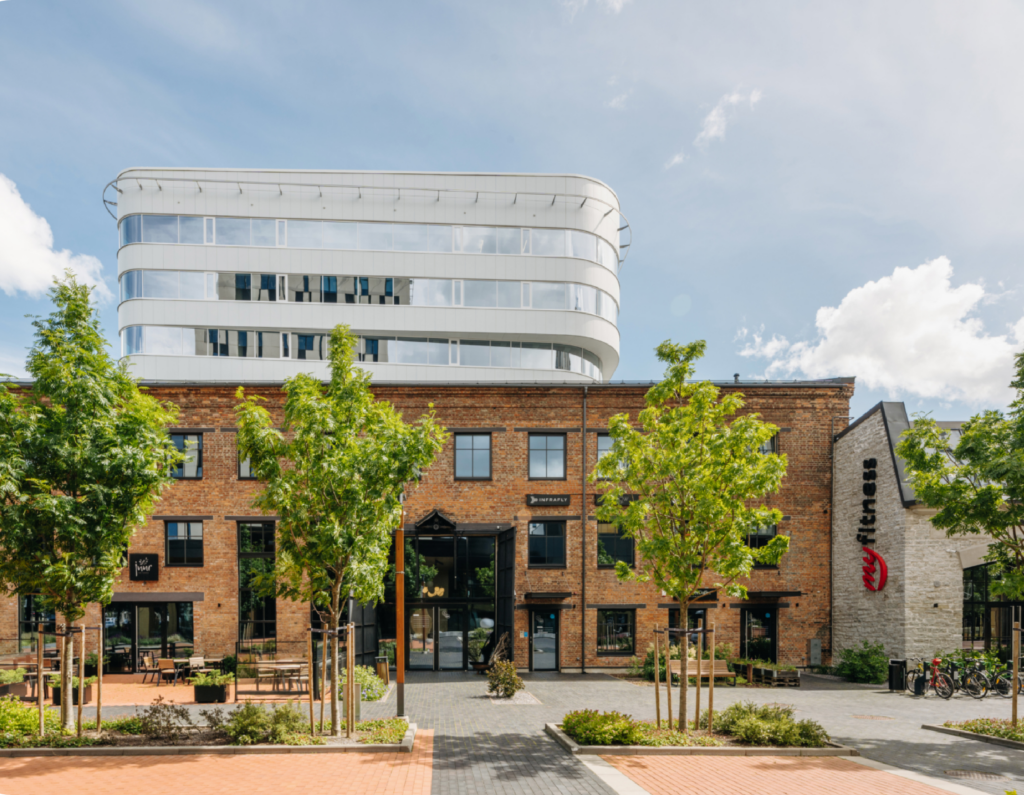
Extending over 36 hectares, Ülemiste City is one of the biggest and fastest-growing smart business centers in the Baltics.
Located right next to Tallinn Airport, the business center hosts 500 like-minded companies and organizations, 20 research institutions, and over 16,000 people from 73 nations who all work or study there.
The Smart City of Ülemiste thrives to be one of the key contributors to the Estonian economy. It’s the home of the Estonian Entrepreneurship University of Applied Sciences as well as to notable technology companies like Helmes, Nortal and Playtech.
Additionally, the smart city hosts Ülemiste Health Center where experienced specialists from various fields of health care provide high-quality evidence-based medical care and primary family medicine services.
Additionally, the smart city hosts Ülemiste Health Center where experienced specialists from various fields of health care provide high-quality evidence-based medical care and primary family medicine services.
Ülemiste aims to attract exceptional talent from around the globe, foster their growth, and empower them to make a difference with daring ideas that can change the world.
The Challenge
Their main challenges were following:
Reduce the number of cars in the area and the number of parking spots needed by the residents.
They were struggling with bike theft in the campus area.
By 2025, the number of residents in Ülemiste is predicted to raise to 20,000 and each new person is likely to want to commute by car and park it nearby.
Cars not only require more space but also increase the level of noise and pollution.
Ülemiste wanted to take tangible steps that improve their sustainability and reduce their carbon footprint.
Additionally, Ülemiste aims to become car-free and carbon-neutral by 2030 in terms of energy consumption.
Ülemiste City is located right next to Tallinn city center and has great public transportation options, including train, bus and tram connections which supports active travel.
The Solution
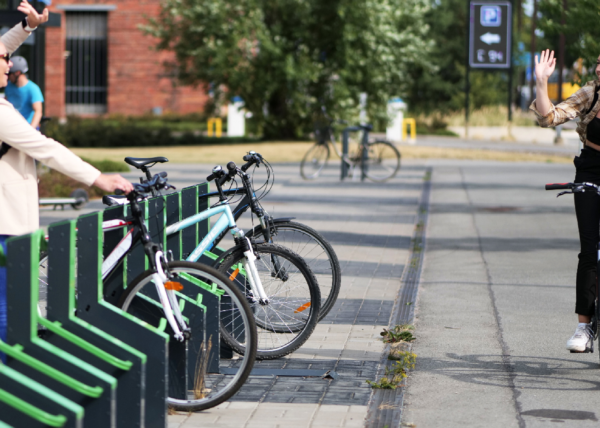
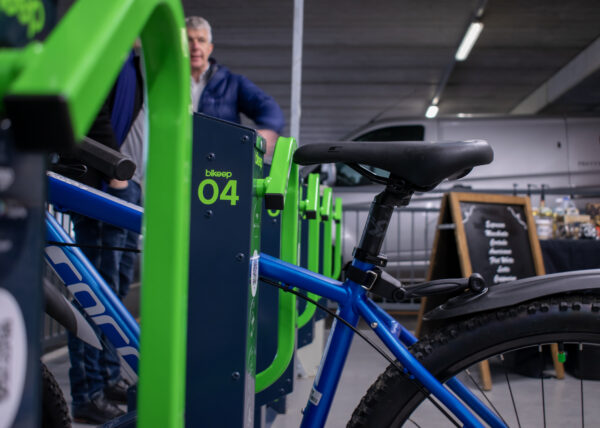
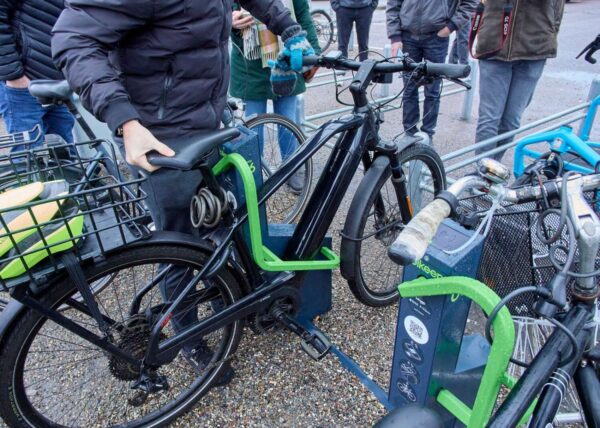
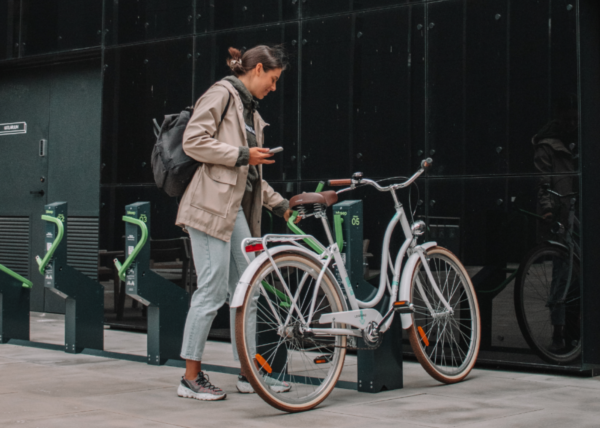
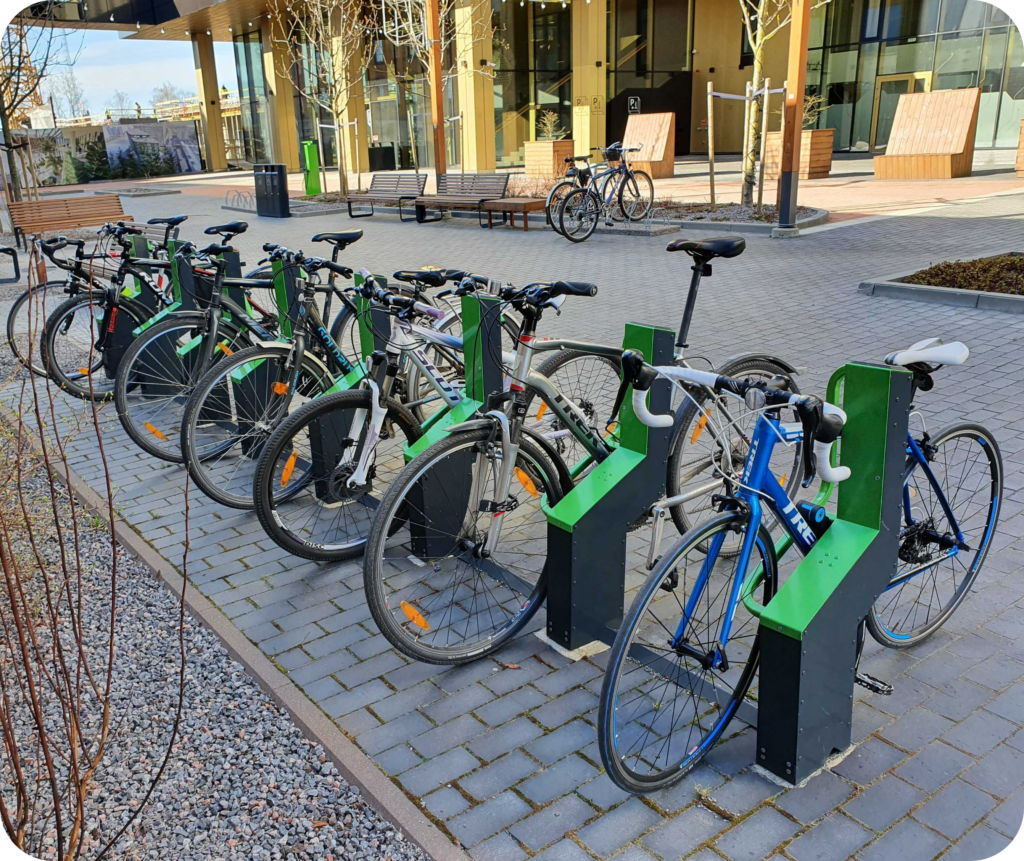
After considering several options, the most beneficial approach was to promote bicycle commuting. Ülemiste implemented a network of 22 Bikeep stations, strategically placed throughout the area, which can accommodate up to 150 bikes and are available free of charge.
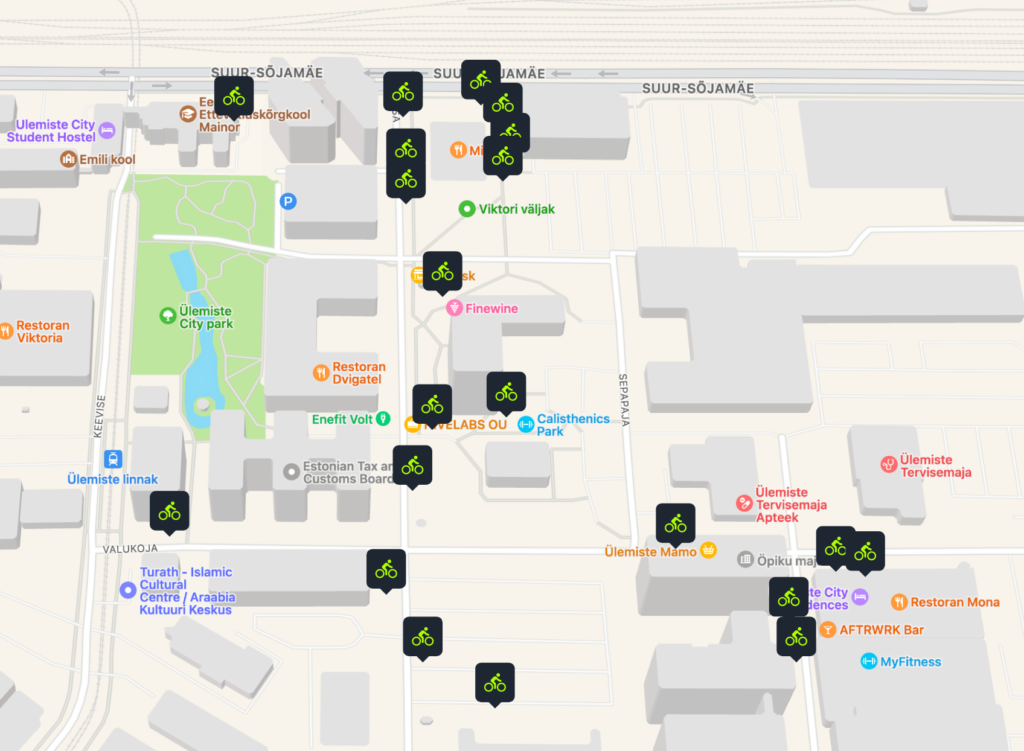
Ensuring the safety and security of these stations was paramount as people needed to feel confident leaving their bikes parked for the duration of the workday. Traditional bike racks were deemed insufficient for this purpose.
The Impact
- There have been no bike thefts to date in any of the Bikeep stations.
- Three times more people now cycle to work compared to the region’s average.
- People move around the property with bikes and scooters, and do not feel the need to use their cars in the campus area.
- Ülemiste was granted Platinum LEED certification partly thanks to the impressive campus-wide secure bike parking network. The recognition was followed by great media coverage and the Ülemiste City brand is now widely recognized as green and sustainable.
- The interest toward Ülemiste commercial real estate is growing exponentially and new buildings are planned every year. Every new building in the campus will have Bikeep stations projected in.
- As the parking stations’ operator, Ülemiste has a real-time overview of all bike stations, how long certain bikes have been parked, and when needed, can contact the owners.

Future Plans
Ülemiste is projected to house 20,000 people by 2025 and to host 2,000 companies by 2030. In anticipation of these developments, a decision was made to expand the network of Bikeep smart bike stations as soon as the occupancy of bike parking lots exceeds a certain threshold. Given the area’s ambitious goal of becoming car-free by 2030, the installation of additional stations is not only desirable but also feasible.